
The AI App I wrote is Running Great !
AI Agents and the Governance Gap: Why Your TRB Approval Is Just the Beginning
In boardrooms and Slack channels across the enterprise, the message is loud and clear: We need AI agents—now. Business leaders see them automating complex workflows, developers dream of agents that write code, orchestrate APIs, and self-improve. Security and IT managers? They’re staring at the mounting pressure from every direction while their governance frameworks—built for yesterday’s static applications—creak and groan.
Welcome to the new normal: agentic AI isn’t just another tool. It’s a living, breathing, decision-making layer woven into your enterprise systems. And the rules written for yesterday’s predictable environments simply don’t scale.
Yesterday’s Governance, Tomorrow’s Chaos
Traditional IT governance was designed for a simpler world. You had known applications, fixed APIs, version-controlled code, and clear boundaries. A Technical Review Board (TRB) would vet the architecture, approve the stack, run the security scan, check the compliance boxes—and that was largely it. Once approved, the system behaved predictably. You could monitor it, audit it, and sleep (mostly) peacefully.
AI agents flip that script entirely.
These autonomous systems don’t just run code—they decide what code to run. They chain tools, call external services, interpret context on the fly, and evolve their behavior based on new data or prompts. One day your agent books meetings and pulls CRM data. The next, it’s quietly integrating with an unvetted third-party API because the model decided it was “helpful.” Artifacts multiply: prompts, tool definitions, memory stores, sub-agents, emergent workflows. Some are known and vetted today. Others arrive unexpectedly tomorrow—spawned by the very agents you approved.
How exactly do you write governance protocols for systems composed of innumerable, shape-shifting pieces?
The Pressure Is Real—and Relentless
Users and developers aren’t waiting for perfect policy. They’re spinning up agents in shadow environments, plugging them into enterprise data via personal API keys, and shipping “productivity boosters” that bypass review entirely. Research shows shadow AI agents are rampant—some studies suggest over 80% of organizations have discovered unknown agents operating in their environments. Yet only about 13% of companies report having mature, adequate governance controls in place.
The result? Agent sprawl, permission creep, unpredictable actions, and data flows that no one fully understands. Traditional controls—static risk assessments, one-time architecture reviews—were never built for this level of dynamism.
TRB Approval: The Starting Line, Not the Finish Line
Here’s the uncomfortable truth that keeps CISOs up at night: when the TRB green-lights an AI agentic product, the real work is only beginning.
Initial approval can validate the high-level design, the data sources, and the intended use cases. But once deployed, those agents operate in the wild. They adapt. They interact with other agents. They encounter edge cases the review never anticipated. They can hallucinate actions, exceed scoped permissions, or chain together behaviors that create brand-new risks.
You need continuous governance now—agent registries to track every deployed instance, runtime observability to watch what they’re actually doing, behavioral baselining, just-in-time permissions for non-human identities, and audit trails that capture not just what happened, but why the agent decided to do it.
Without these, you’re flying blind.
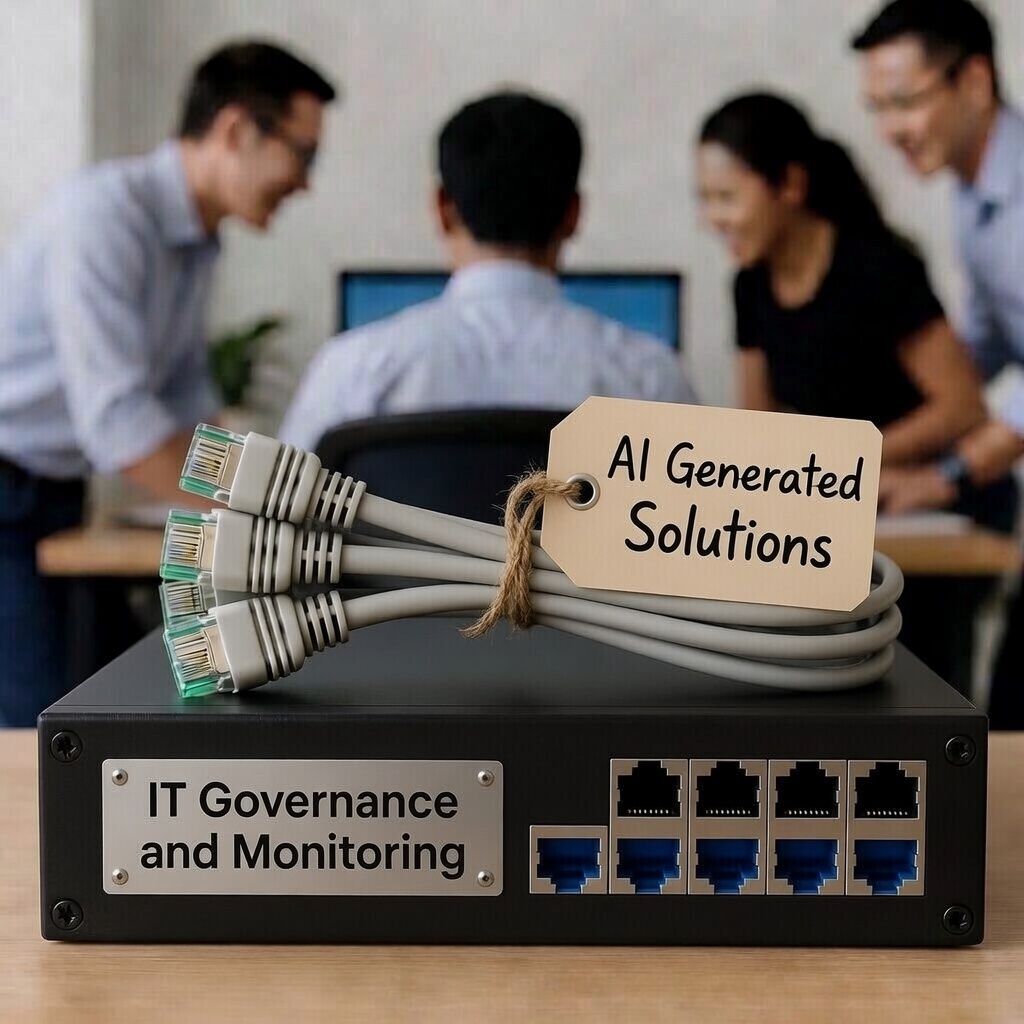
Don’t Forget to Plug It In
The age of AI agents demands a new mindset: governance is no longer a gate at the beginning—it’s a living, breathing discipline that runs 24/7.
Build the registries. Implement the observability. Enforce runtime controls. Keep humans in the loop for high-stakes decisions. Update your policies for non-deterministic systems. And above all, treat every AI agentic deployment as an ongoing relationship, not a one-and-done project.
Because in the rush to harness these powerful new capabilities, it’s easy to get excited, flip the switch, and walk away.
Just don’t forget to plug it in.